eustachian tubes
In anatomy, the Eustachian tube, also known as the auditory tube or pharyngotympanic tube, is a tube that links the nasopharynx to the middle ear, of which it is also a part. In adult humans, the Eustachian tube is approximately 35 mm (1.4 in) long and 3 mm (0.12 in) in diameter.
https://en.wikipedia.org › wiki › Eustachian_tube
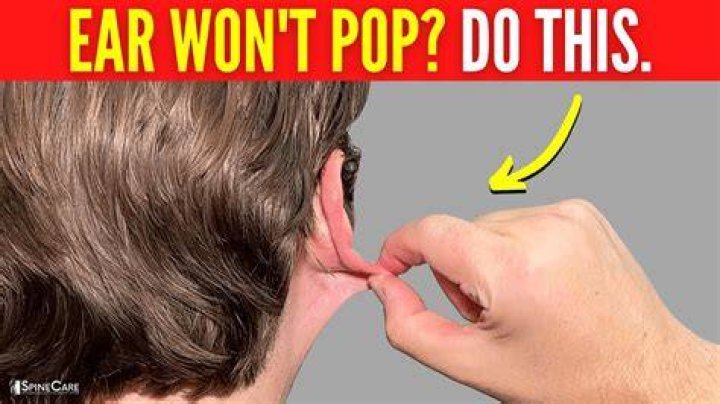
How can you get your ears to pop?
Try forcing a yawn several times until the ears pop open. Swallowing helps to activate the muscles that open the eustachian tube. Sipping water or sucking on hard candy can help to increase the need to swallow. If yawning and swallowing do not work, take a deep breath and pinch the nose shut.
What opens up your ears?
The Eustachian tube is an opening that connects the middle ear with the nasal-sinus cavity. This tube helps to: Balance pressure in the middle ear (commonly felt as your ears popping) Drain fluid from the middle ear.
How do you cure a blocked ear?
Treatments for a clogged ear
- Use the Valsalva maneuver. This simple trick helps open your Eustachian tube. ...
- Inhale steam. Turn on a hot shower and sit in the bathroom for 10 to 15 minutes. ...
- Dislodge trapped fluid. ...
- Take over-the-counter medication. ...
- Ear drops.
How do you unblock your ears quickly?
How to make your ears pop
- Swallowing. When you swallow, your muscles automatically work to open your eustachian tube. ...
- Yawning. Yawning also helps open the eustachian tube. ...
- Valsalva maneuver.
- Toynbee maneuver. ...
- Applying a warm washcloth. ...
- Nasal decongestants. ...
- Nasal corticosteroids. ...
- Ventilation tubes.
5 Ways To Unclog Your Plugged Up Ears | Ear Problems
How do you unblock your ears at home?
If your ears are plugged, try swallowing, yawning or chewing sugar-free gum to open your eustachian tubes. If this doesn't work, take a deep breath and try to blow out of your nose gently while pinching your nostrils closed and keeping your mouth shut. If you hear a popping noise, you know you have succeeded.
Why is my ear clogged?
Plugged ears can be caused by a few different things. The reasons include fluid in the ear, changes in atmospheric pressure, excessive ear wax, or even small objects blocking the eardrum. Each cause has a different treatment, and it's important to get a professional opinion.
What do you do when your ears won't pop?
The sensation of having clogged ears happens when your body can't equalize the pressure in your ears because your eustachian (auditory) tubes are blocked. You can try to pop your ears by yawning, swallowing, or chewing. Taking decongestants may also help.
What can cause blocked ears?
This can be caused by a buildup of fluids, loud sounds, foreign objects in the ear, severe head trauma, severe changes in air pressure, and ear infections (see next section). A ruptured eardrum can make your ears even more vulnerable to infections which may further block eustachian tubes.
Why do my ears feel muffled?
Why is sound muffled when there doesn't appear to be anything inside your ear canal? The causes can range from the earwax to allergies to infections (yes, including COVID) to more insidious conditions like anxiety disorder or Meniere's disease.
Will my ear ever pop?
While pressure in the ears can be highly uncomfortable, it is generally not dangerous, and a rapid change of pressure in the ear can put the eardrum at risk. It sometimes takes a few days for the pressure to balance out, but a person will then notice a “pop” as the eustachian tube clears.
How long do blocked ears last?
Over about 2 weeks, lumps of earwax should fall out of your ear, especially at night when you're lying down. There's no evidence that ear candles or ear vacuums get rid of earwax.
Why does my ear feel full?
Common causes include fluid in the middle ear, hay fever, allergies or over-excessive nose blowing. Ear pain can be associated with ear congestion in cases of infections or with airplane travel, with sudden changes in barometric pressure, which most often occurs during descent.
Why is my ear clogged and ringing?
Ear Infections
One of the most common causes of clogged or ringing ears is an ear infection. Outer ear infections, commonly called swimmer's ear, are caused by a bacterial or viral infection in the ear canal that leads to a buildup of fluid and pressure in the ear.
Can't hear out of ear after waking up?
SSHL happens because there is something wrong with the sensory organs of the inner ear. Sudden deafness frequently affects only one ear. People with SSHL often discover the hearing loss upon waking up in the morning. Others first notice it when they try to use the deafened ear, such as when they use a phone.
Does Covid affect your ears?
And, because COVID-19 causes inflammation in the nose and nasopharynx (the upper part of the throat located behind the nose), the Eustachian tube (the tube that connects the nose and middle ear) may also become inflamed during the course of the infection and lead to middle ear congestion.
How can I clean my ears out?
Safe ways to remove earwax
- Ask your doctor to remove the wax in their office.
- Clean the outside of your ear with a damp cloth.
- If you choose to use cotton swabs, don't insert them into the ear canal.
- You can use earwax softener to soften earwax for easier removal.
- You can use a syringe to irrigate your ears.
Why do my ears itch?
Itchy ears can sometimes be a sign of an ear infection. Bacteria and viruses cause them, usually when you have a cold, the flu, or allergies. One kind, swimmer's ear, can happen when water stays in your ear after you swim. Too much moisture wears away your ear canal's natural layer of defense against germs.
Can you get COVID-19 twice?
Yes, you can get COVID-19 more than once. “We're seeing more reinfections now than during the start of the pandemic, which is not necessarily surprising,” Dr. Esper says. He breaks down the reasons behind reinfection.
How do you get rid of COVID ears?
Management tips: Turn on a fan, open a window, turn the TV on low or use a sound machine. If you have associated hearing loss, hearing aids or amplifiers may help. Tinnitus retraining therapy or cognitive behavioral therapy has been shown to be effective.
Do you go deaf when you sleep?
Researchers have long thought that when you fell asleep you didn't hear anything happening around you. Sleep was the time our body would shut itself off from the outside world to consolidate learning and memory, rest and recharge, and boost immune responses. But that can't be entirely true.
What does going deaf feel like?
General symptoms of hearing loss
Friends or family say you turn the television or radio up too loud. You struggle to understand speech, especially in noisy environments. You have difficulty hearing people on the phone. A feeling that you can hear, but not understand.
Will a muffled ear go away?
In many cases, a muffled ear will go away on its own. This is especially true for conditions like airplane ear, or sickness-related hearing loss. Even certain ear infections will resolve themselves if given time, but there are some instances where you should not wait to seek medical treatment.